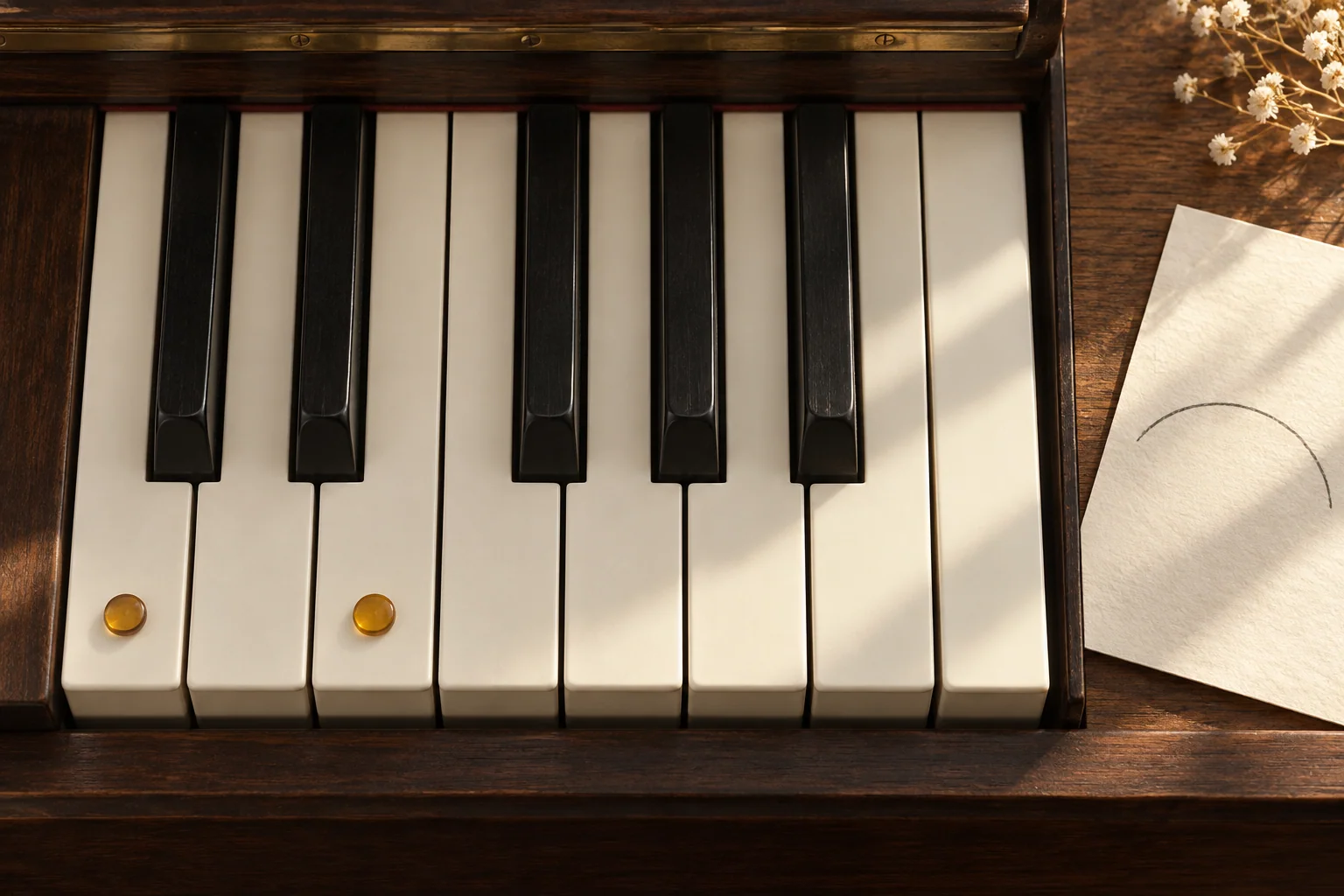
Use original exercises, listening tasks and manageable routines to work on one skill at a time. Accuracy and relaxed control come before faster repetition.
A three-minute experiment with a clear check
First minute: find C–E–G and name the root, third and fifth. Release the keys before repeating; comfortable movement matters more than speed.
Second minute: move C above G to make E–G–C, then move E above C to make G–C–E. Identify the new bass before each attempt.
Third minute: close or cover the diagram. Rebuild the position that has G lowest, then check it against the C major reference.
A useful result is being able to explain which member is lowest. If you guessed the shape, repeat the naming step rather than making the loop faster. Split the notes between your hands if that is more comfortable; this is a note-recognition task, not a prescribed fingering exercise.
The inversion routine extends this task to connected chords. The interval guide below gives listening examples if identifying a distance is the part that needs attention.
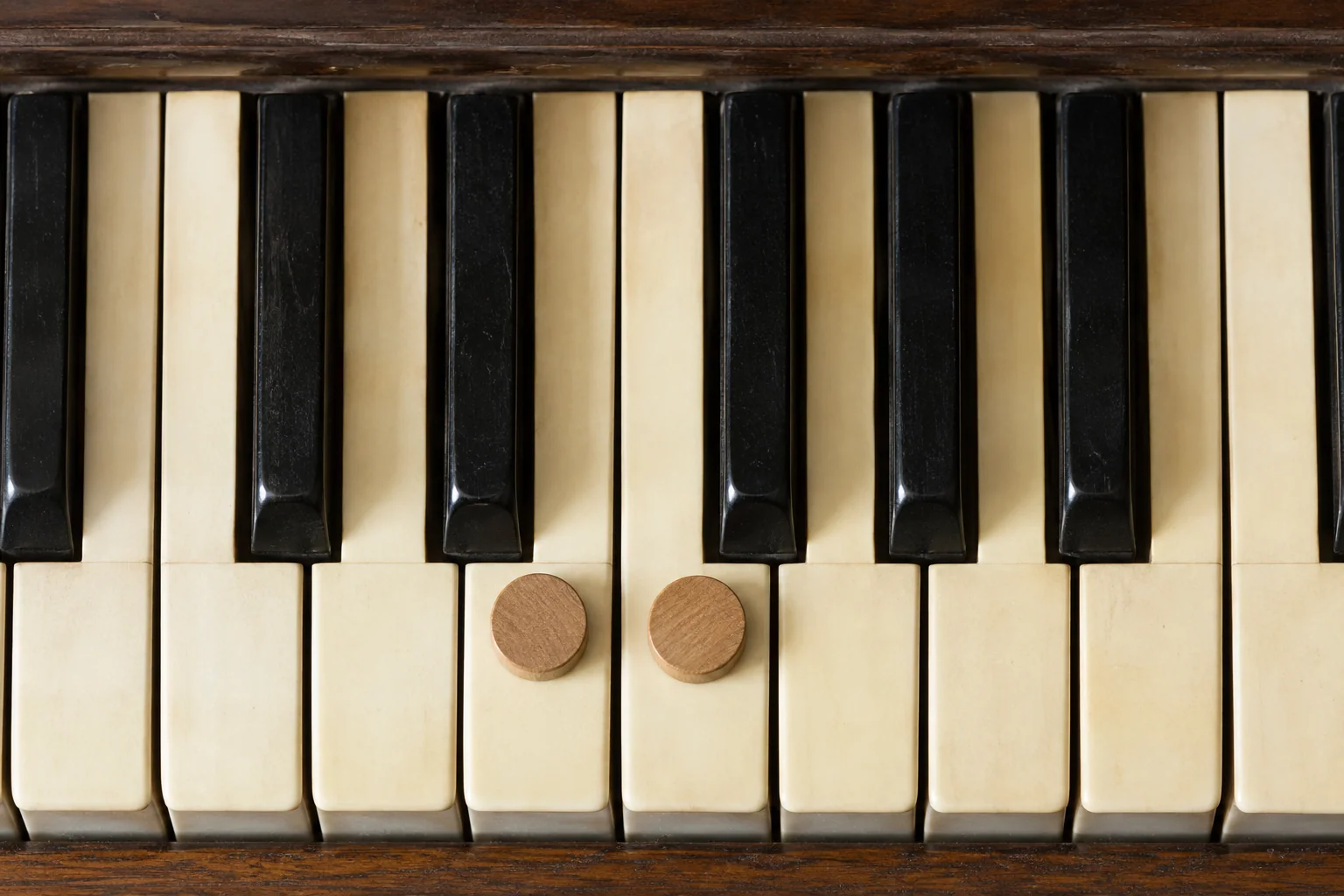
Find whole steps and half steps across black and white piano keys, including E–F and B–C, with original listening examples and a checked practice task.
Separate-hand work can clarify notes and rhythm. Bring hands together slowly when each part is understood, then adjust the task to the coordination problem.
How do I choose a starting tempo?
Choose a pace at which movement and rhythm are controlled. A metronome is a reference, not a reason to repeat the same mistake faster.
Your privacy choice
Optional Google Analytics stays off until you accept. Your choice is saved on this device. Privacy details
 Piano Chord Library
 Rob