Piano Chord Library
 Rob
Rob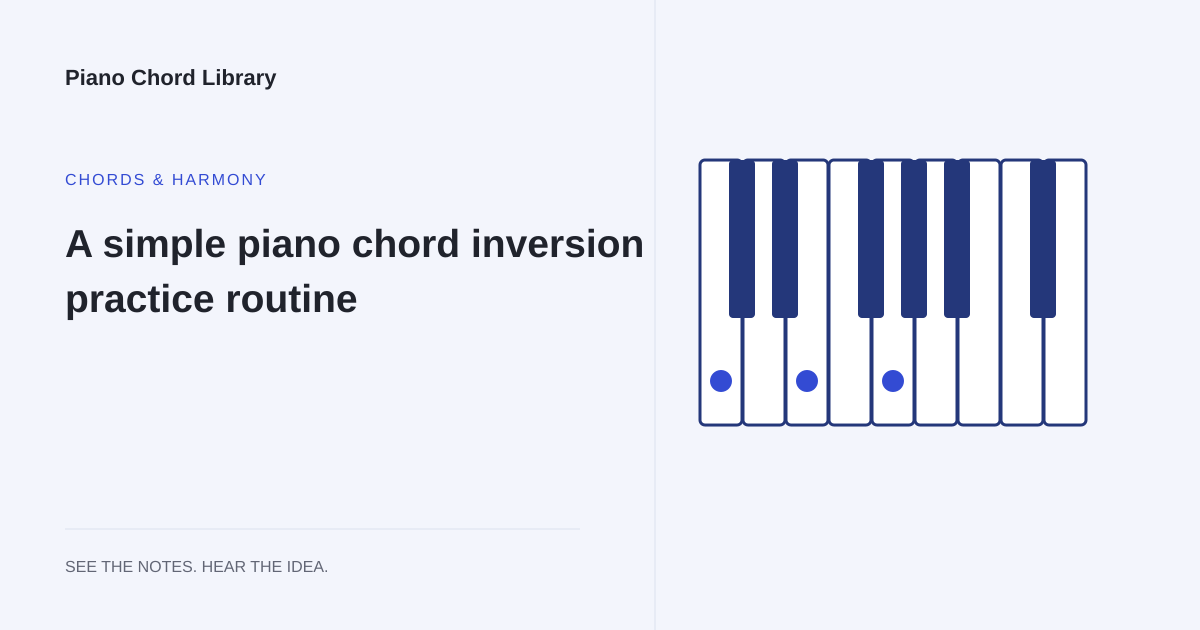
Keep the notes. Change the bass.
Begin with C major: C–E–G. Move the lowest C above G to get E–G–C. Move the lowest E above that C to get G–C–E. Those are root position, first inversion and second inversion.
A short practice loop
- Choose one chord in the inversion explorer. Say all three note names.
- Play each note separately, then together, at a comfortable volume.
- Move to first inversion. Name the new bass before playing.
- Move to second inversion, then return to root position.
- Repeat slowly without the diagram, then check your notes.
Listen to what stays the same
The register and bass change, but the chord's three pitch classes remain. Try switching between major and minor while keeping the same root and inversion. Identify the third wherever it appears in the voicing.
Connect two chords
Compare C major (C–E–G) with A minor (A–C–E). They share C and E. Try different inversions and observe which notes stay close. This is a starting point for voice leading, not a rule that every progression must follow the smallest movement.
Focus on note recognition and listening. No single fingering is prescribed here; hand size and the surrounding music affect a comfortable choice.
Theory reference: Open Music Theory: Inversion.