 Piano Chord Library
Chords & harmony
Major and minor piano chords explained
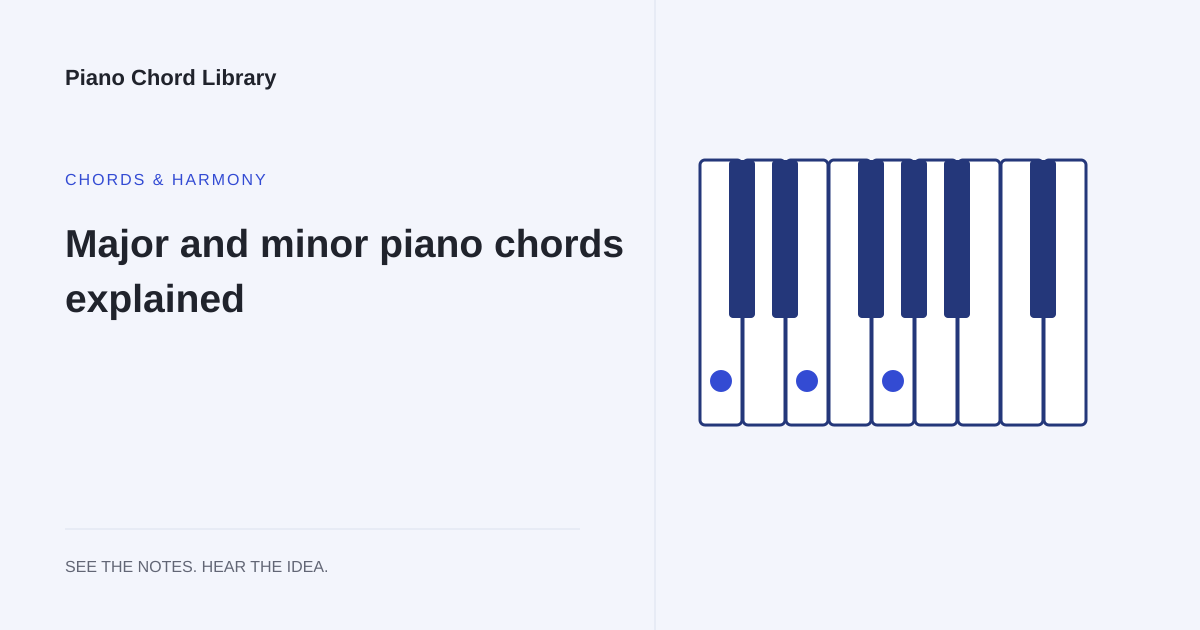
Learn the root, third and fifth of a triad, then change one note to hear the difference between major and minor.
Read the guide : Major and minor piano chords explainedExplore the topic
Build chords and understand how they move.
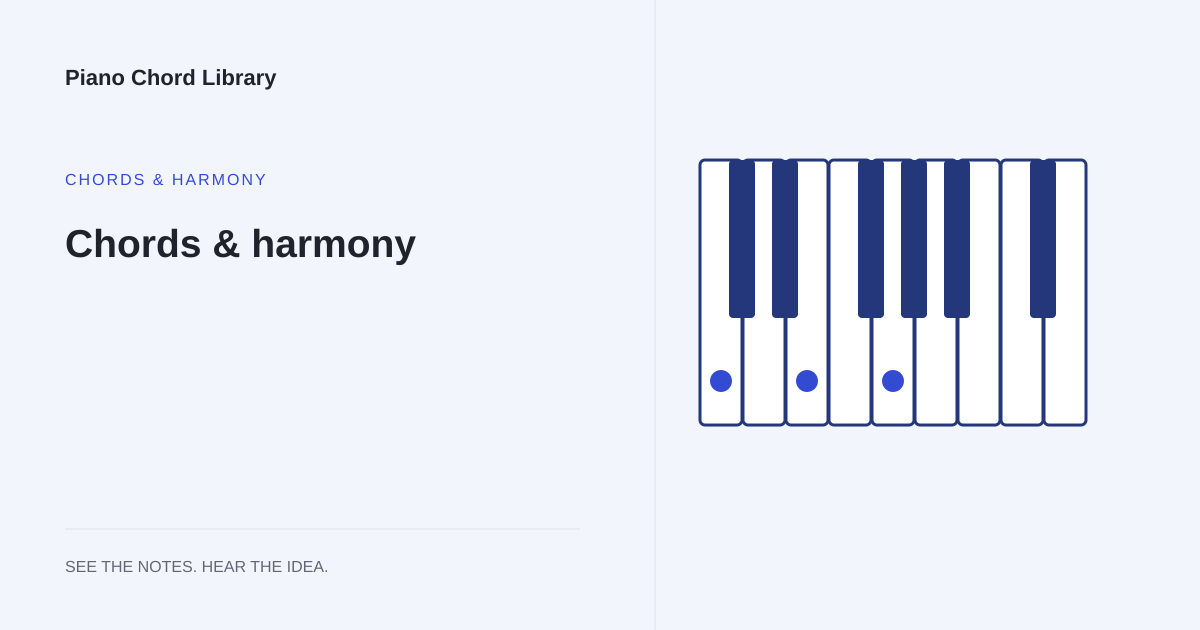
Explore intervals, chord formulas and harmonic relationships on the keyboard. Original diagrams and examples connect written notes to sound.
Find C–E–G, then keep C and G still while lowering E to E♭. You have changed C major to C minor. Now restore E and add B♭ above G: C–E–G–B♭ is C7. The minor third and the minor seventh do different jobs; a plain 7 does not mean a minor triad.
| Symbol | Notes | What changed from C major? |
|---|---|---|
| C | C–E–G | Starting triad |
| Cm | C–E♭–G | Third lowered a semitone |
| C7 | C–E–G–B♭ | Minor seventh added |
Hear each version in the chord explorer, or use the C7 reference for a worked resolution into F major. When you can name the changed member, choose a guide below to investigate why the chord moves that way.
Terminology reference: Music Theory for the 21st-Century Classroom. The worked tasks here are original.
10 published guides
Learn the root, third and fifth of a triad, then change one note to hear the difference between major and minor.
Read the guide : Major and minor piano chords explainedA little more context
An inversion changes the bass while keeping the chord tones. A voicing can change spacing and register without changing the basic chord identity.
A key identifies a sounding pitch; its written name describes its role in a scale or chord. Correct spelling makes relationships easier to read.
 Rob