 Piano Chord Library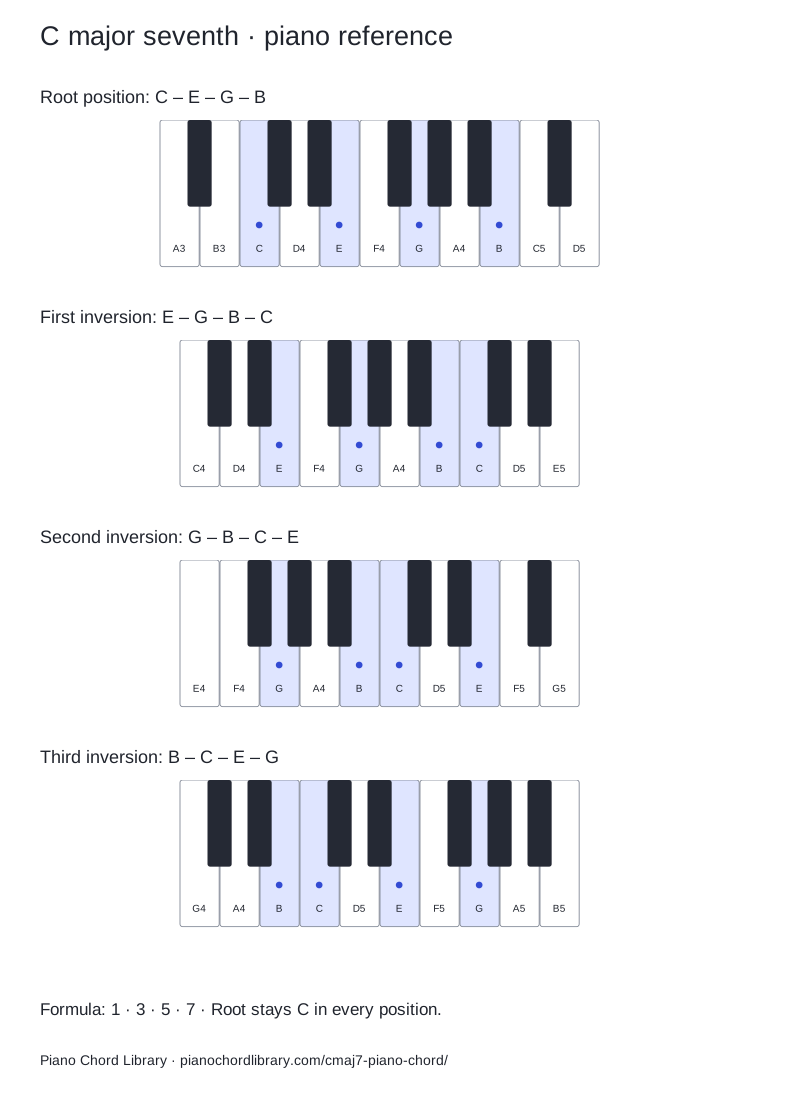
Build C major seventh
Start with C, then find the third, fifth and seventh. Cmaj7 contains C, E, G and B. Its formula is 1 · 3 · 5 · 7, measured against a major scale on the same root. A seventh chord has four different notes, not seven.
Keep similar symbols separate
Cmaj7 and C7 share C–E–G. Only the seventh changes: B for Cmaj7, B-flat for C7. Neither symbol means C minor seventh, which also lowers E to E-flat.
Try a controlled listening comparison
Play C–E–G, release it, then play C–E–G–B. Listen for the extra note just below the next C. Next play the first inversion E–G–B–C: the nearby B and C are a semitone apart, even though B is a major seventh above the root in root position.
Use the chord in an original practice move
Try Cmaj7 → Fmaj7 using C–E–G–B followed by C–E–F–A. Keep C and E in place; move G to F and B to A. This is an original two-chord comparison of shared notes, not a song transcription.
Sound the notes separately before playing them together. Split a wide shape between two hands or choose a closer position; the reference does not require a fixed fingering. Stop if a stretch is uncomfortable. Playback is synthesized and begins only when you press Play.
Check your result
- Say the four note names before pressing the keys.
- Identify the lowest note and match it to the table.
- Listen once together, then one note at a time. An inversion should keep the same four pitch classes.
Compare C7 and its B-flat · Explore every root and seventh quality
Chord terminology checked against Music Theory for the 21st-Century Classroom: seventh chords. Diagrams and practice sequences are original.